
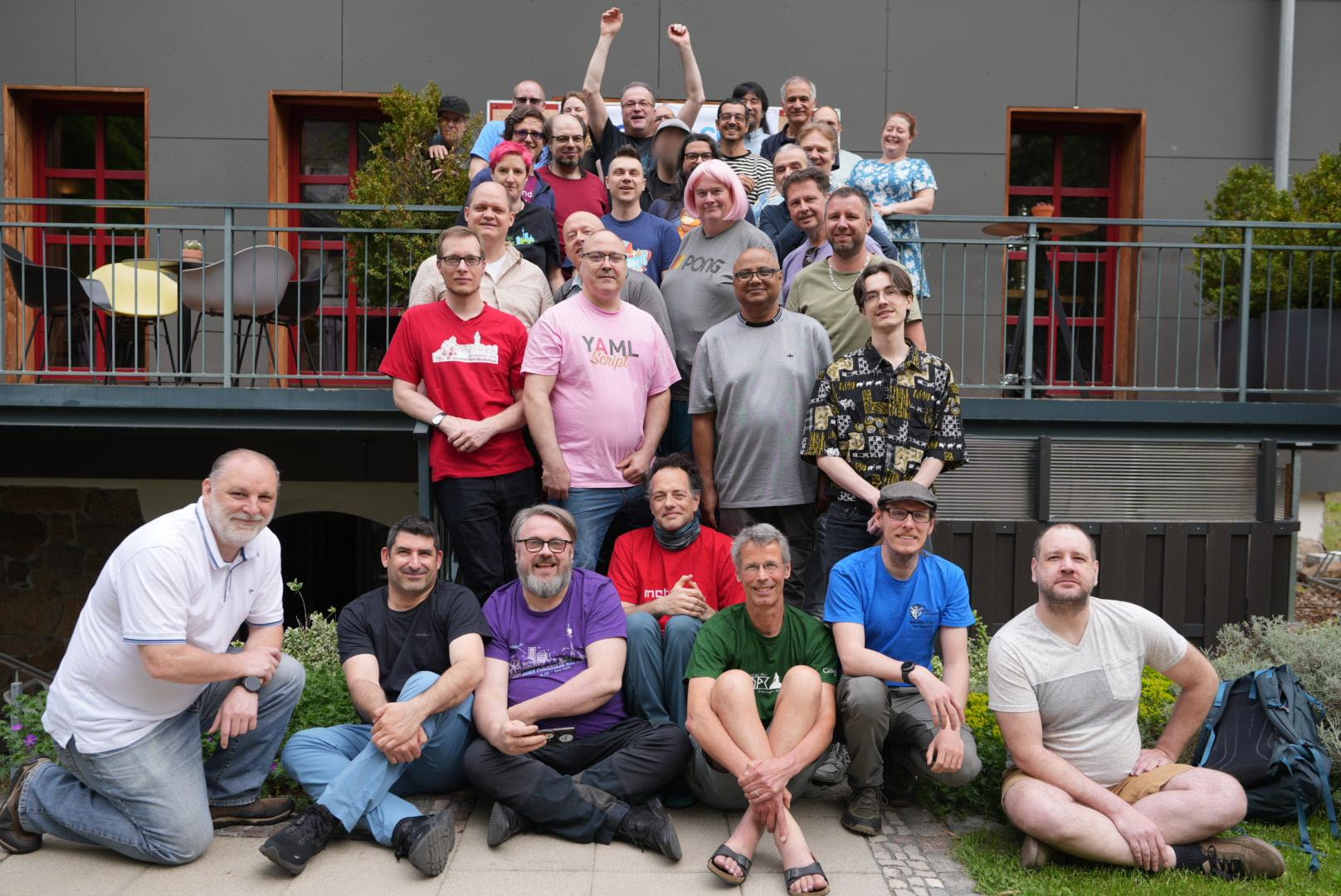
In 2025, I traveled to Leipzig, Germany, to attend the Perl Toolchain Summit. It was an opportunity to spend several days with some of the people responsible for maintaining the tools and infrastructure that Perl programmers depend on every day.
If you’re not part of the Perl community, you may never have heard of the Toolchain Summit. Even if you are, you might not know quite what goes on there.
It’s not a conventional technology conference. There aren’t multiple tracks of presentations, exhibition halls full of vendors, or a parade of keynote speakers. Instead, a relatively small group of developers, maintainers, and other contributors gathers in one place to work.
And work they do.
The people attending the Summit maintain much of the machinery that makes Perl useful: the tools that build and distribute software, the testing systems that help keep it reliable, and the infrastructure that allows programmers around the world to share their work.
Most of this machinery is invisible when it’s working properly. You don’t think much about the systems that let you install a software package until something goes wrong.
And that’s rather the point.
What Leipzig Meant to Me
My visit to Leipzig reinforced something I’ve believed for a long time: a healthy software community depends on considerably more than the software itself.
It depends on people.
People who understand how the pieces fit together. People who spend their evenings fixing problems that most users will never know existed. People who answer questions, review code, maintain servers, and patiently explain why something works the way it does.
Much of this work is volunteer labor, performed by people who have jobs, families, and plenty of other demands on their time.
Getting those people together in the same room is enormously valuable.
Conversations that might take weeks of emails can happen over a cup of coffee. Someone wrestling with a stubborn technical problem can turn to the person sitting across the table. Ideas develop, assumptions get challenged, and people who ordinarily work alone have an opportunity to collaborate.
But there’s another benefit, one that’s perhaps less obvious.
Knowledge gets shared. And that’s becoming increasingly important.
My fondest memories of the conference in Leipzig revolve around exactly this sort of sharing. For four days, we collaborated from early in the morning, over breakfast, until late in the evenings. I had a lovely brunch with Perl core contributor (and TPRF grant recipient) Paul Evans, a late-night hotel-bar session with CPANSec powerhouse Salve Nielsen, and big chunks of time talking with Test2 guru Chad Granum. A group of us sat down outside on a sunny afternoon for a discussion about the future of CPANTesters.
Ironically, I didn’t write much code at Leipzig. That might seem strange for a conference about a programming language. But those meetings and discussions are critically important, and I was honored to spend my time learning from others, sharing what I know, and encouraging this community of important doers. Getting all that knowledge out on the table for others to see was cruicial, and it stimulated new levels of activity in important parts of the Perl ecosystem.
Thinking About the Future
I’m currently Co-Treasurer of The Perl and Raku Foundation, a nonprofit organization that supports the languages and their communities.
One of the initiatives I’m pursuing concerns what we call ecosystem resilience.
It’s a rather formal-sounding term for a set of very human questions.
What happens when an important piece of infrastructure depends on just one person?
What happens when that person retires, becomes ill, changes jobs, or simply decides they’ve done enough?
Does anyone else know how the system works? Is there documentation? Are there people ready and willing to take over?
These aren’t hypothetical concerns, and they aren’t unique to Perl. Volunteer-driven projects everywhere face the same challenges.
Software can remain useful for decades, but only if the knowledge and resources needed to maintain it survive alongside the code.
I want to help us understand where the Perl ecosystem is vulnerable, where we’re doing well, and what we can do to make its future more secure.
The Toolchain Summit is an excellent place to begin some of those conversations.
On to Lyon
The next Perl Toolchain Summit will take place in Lyon, France, from April 29 through May 2, 2027.
I’m planning to attend, with a particular focus on meeting the maintainers of critical infrastructure, learning about the challenges they face, and identifying opportunities to improve long-term sustainability.
My hope is to bring home more than a collection of notes and pleasant memories. I intend to produce a public report of what we learn and what we might do next, while respecting the confidentiality of any sensitive information shared during the discussions.
That report won’t solve every problem. But understanding the terrain is a necessary first step toward making meaningful improvements.
A Little Help Getting There
The Toolchain Summit is supported by sponsors and donors. Its organizers work hard to make participation possible for contributors who might otherwise be unable to afford the trip.
But resources are limited, particularly for the 2027 gathering.
Rather than relying entirely on the Summit’s budget for my travel expenses, I’ve launched a personal GoFundMe campaign to help cover the cost of getting to Lyon.
My goal is $2,600, which should cover approximately $2,500 in airfare, rail travel, and lodging, plus transaction fees.
Every contribution will reduce the amount of assistance I’ll need from the Summit organizers. And if the campaign raises more than my actual expenses, the surplus will go to the Summit to help other participants attend.
This is my personal fundraising effort, separate from the Foundation’s activities and the Summit’s official sponsorship campaign.
If you’d like to help, I’d be grateful.
Help Me Get to the Perl Toolchain Summit in Lyon
And if contributing isn’t practical, sharing the campaign with someone who cares about open-source software would be a kindness, too.
The People Behind the Code
One of the things I’ve come to appreciate about open-source software is how much of it rests on generosity.
People give their time, their knowledge, their patience, and sometimes their own money to create and maintain things that other people use freely.
That’s a remarkable arrangement, when you think about it.
But generosity alone isn’t a sustainability plan.
We also need to make sure that the people doing this work have support, that their knowledge is preserved, and that someone will be there to carry things forward when they’re ready to step away.
That’s the work I hope to help with in Lyon.
And it’s work I believe is worth doing.
This is a personal fundraising campaign, not an official fundraising effort of The Perl and Raku Foundation or the Perl Toolchain Summit. Contributions toward my travel expenses should not be assumed to be tax-deductible charitable donations.